How to Actually Get Your Baby to Sleep Through the Night
If you have Googled this at 3 a.m. with a wide-awake baby on your chest, first of all: you are in excellent company. Virtually every new parent reaches a point where they would trade almost anything for a full night of uninterrupted sleep, and the internet is absolutely drowning in advice about how to get there.
Some of it is helpful. Some of it is vague. Some of it will make you feel like you are doing everything wrong when you are actually doing just fine.
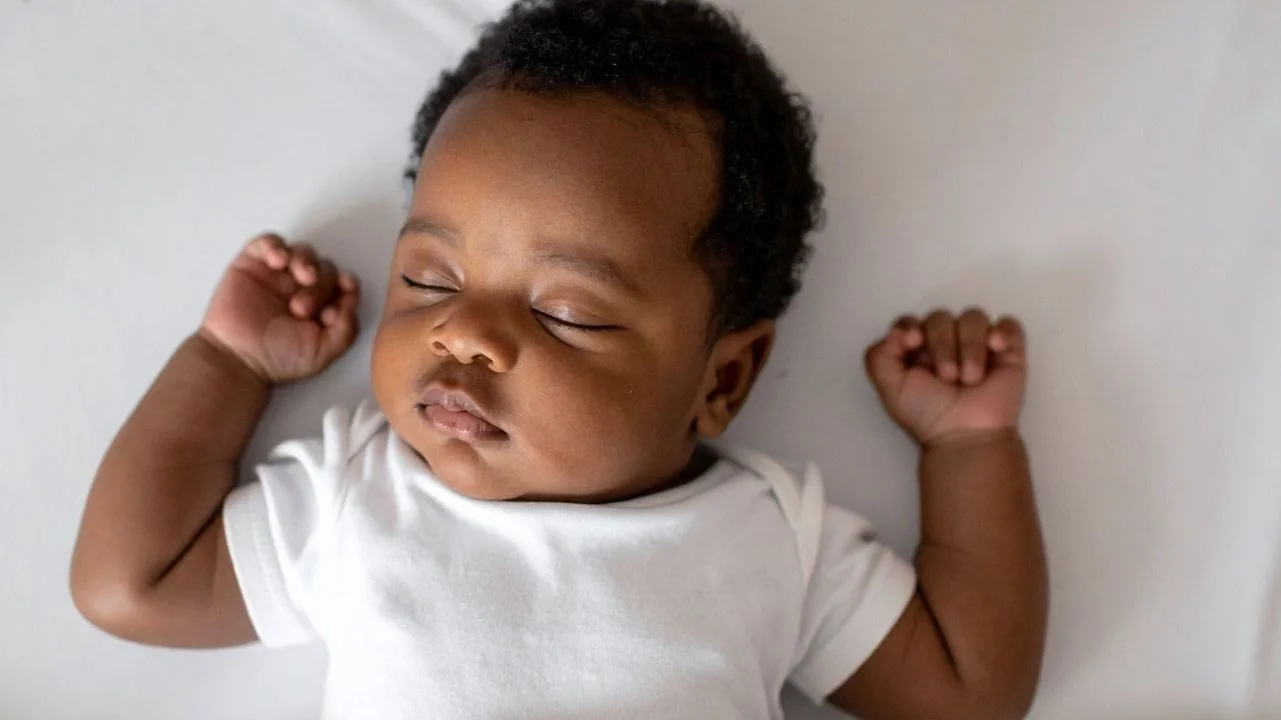
So let me give you a clear, honest breakdown of what sleeping through the night actually looks like at different ages, what you can realistically do to support better sleep at each stage, and why it is okay if your baby is not fitting neatly into any of those boxes. Because plenty of babies do not, and that is not a reflection of your parenting.
First, Let's Redefine "Sleeping Through the Night"
Here is something nobody tells you: the clinical definition of sleeping through the night for a baby is a stretch of five hours. Five. Not eight, not ten, not the blissful unbroken sleep you remember from your pre-baby life. When a pediatrician or sleep researcher says a baby is sleeping through the night, they mean five consecutive hours, usually measured as something like midnight to 5 a.m.
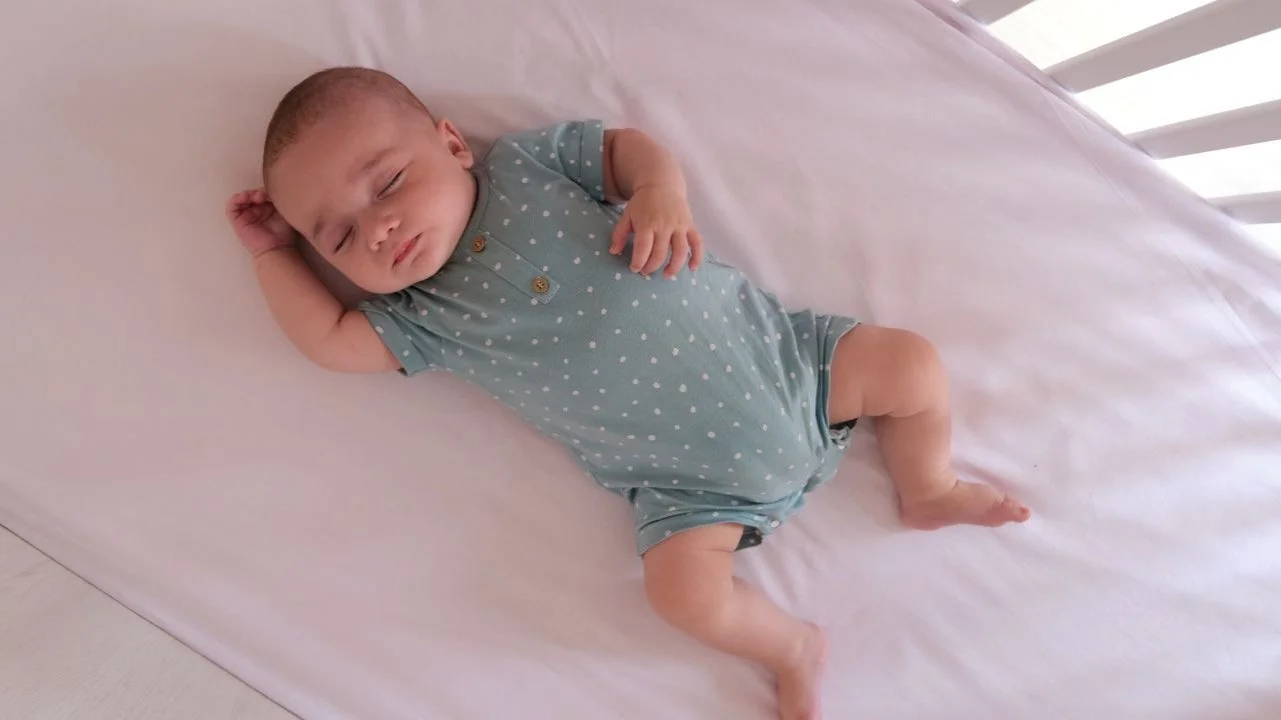
Understanding this matters because a lot of parents are convinced something is wrong when their four-month-old wakes twice a night, when that is actually developmentally appropriate and completely normal. Adjusting your benchmark does not mean giving up on better sleep. It means you stop measuring your baby against an unrealistic standard and start meeting them where they actually are.
What to Expect at Every Stage
0 to 8 Weeks: Survival Mode Is the Strategy
In the first two months, your baby has no circadian rhythm. None. Their internal clock has not developed yet, which means day and night genuinely feel the same to them. Their stomach is tiny, their caloric needs are enormous relative to their size, and waking every two to three hours around the clock is exactly what they are biologically designed to do.
This is not a sleep problem. This is a newborn.

What you can do right now is focus on laying the groundwork without expecting immediate results. Start exposing your baby to natural light during the day and keeping nights dark and quiet. This begins training their circadian rhythm even before it is fully online. A simple, consistent bedtime routine, even just a feeding and a swaddle in a dim room, plants an early seed that night is different from day. Watch your baby's wake windows closely and put them down before they hit overtired territory, because an overtired newborn is significantly harder to settle than a sleepy one.
Realistic expectation: one longer stretch of three to four hours somewhere in the night, surrounded by shorter stretches. That is a win at this age.
8 to 12 Weeks: The Window Opens
Around eight weeks, something shifts. Melatonin starts coming online. Babies begin to consolidate their longest stretch of sleep toward the early part of the night, and for the first time, you might start to see four, five, even six hour stretches if conditions are right. This is genuinely one of the most important windows in infant sleep development, and it is the exact reason this is when I start working with families on sleep foundations.
At this stage, your environment does a lot of the heavy lifting. A dark room, genuine darkness not just dim, makes a significant difference. White noise at around 65 to 70 decibels (roughly the sound of a running shower) helps muffle household sounds that can trigger brief arousals into full wake-ups. A consistent bedtime somewhere between 7 and 9 p.m. starts anchoring the night.

You can also begin experimenting with putting your baby down drowsy but still somewhat awake, which gives them early practice at the skill of drifting off on their own. Do not stress if this does not click yet. At eight to twelve weeks, it is an introduction, not an expectation.
Realistic expectation: one stretch of four to six hours in the first part of the night, one to two more wake-ups before morning. Babies fed on demand at this age may need one true middle-of-the-night feed, and that is completely appropriate.
3 to 6 Months: The 4-Month Sleep Regression (Yes, It Is Real)
Around three to four months, your baby's sleep architecture permanently changes to resemble adult sleep cycles, with more time in lighter stages and more frequent partial arousals between cycles. For babies who have learned to fall asleep with a prop, whether that is nursing, rocking, or a pacifier, those arousals now require the same prop to get back to sleep. This is the four-month sleep regression, and it is not a phase that passes on its own. It is a permanent neurological shift.
The good news: this is also the age at which many sleep training approaches become appropriate, if that is something your family wants to pursue. By four to six months, most healthy, typically developing babies have the caloric capacity to reduce or eliminate nighttime feeds, and the neurological maturity to begin learning independent sleep skills with guidance. This does not mean you have to sleep train, but if you want to, this is generally when it becomes a reasonable option.

Whatever path you choose, consistency is doing most of the work. Consistent nap schedule, consistent bedtime routine, consistent sleep environment. Babies at this age thrive on predictability because their nervous systems are still regulating, and a recognizable sequence of events tells their brain that sleep is safe and coming.
Realistic expectation: a five-to-seven-hour stretch is very achievable by five months for many babies, though there is a wide range. Some babies are logging nine-hour stretches and some are still waking twice. Both can be normal.
6 to 9 Months: Sleep Should Be Consolidating
By six months, most babies no longer have a nutritional need for nighttime feeds, though some still benefit from one, particularly breastfed babies. If your baby is waking multiple times a night at this age, it is usually a habit rather than a hunger issue, and habits can be changed.
Daytime sleep matters enormously here. A well-rested baby sleeps better at night. It sounds backwards but it is one of the most consistent things I see in my work with families: the babies who are overtired from short or skipped naps are almost always the ones struggling most at night. Most six-to-nine-month-olds are doing two naps with a total of two to three hours of daytime sleep, and an age-appropriate wake window before bed of about two to two-and-a-half hours.
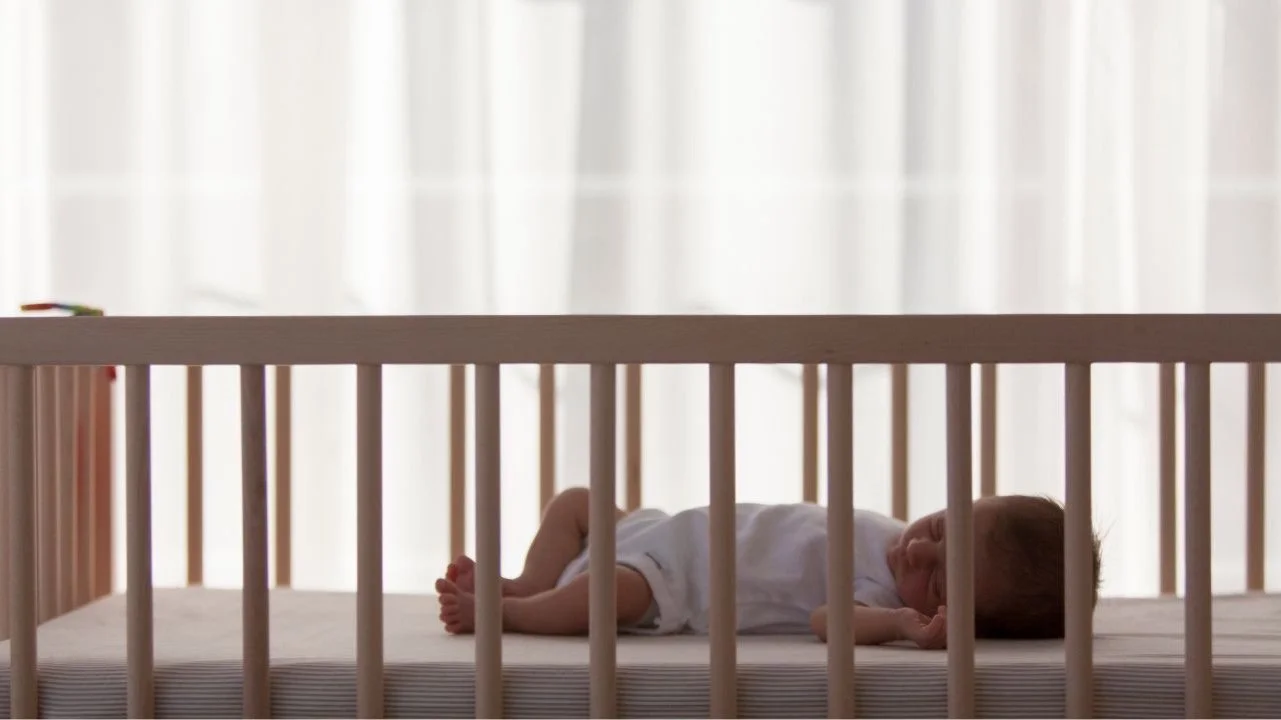
Separation anxiety also begins showing up around this age and can feel like a sudden sleep regression. Your baby is not manipulating you. Their brain has just matured enough to understand that you exist even when they cannot see you, and they want you back. This is developmentally healthy. It is also exhausting. A consistent goodbye and check-in approach, whatever method fits your parenting philosophy, helps your baby build confidence that you will return.
Realistic expectation: ten to twelve hours at night with one or zero wake-ups is a reasonable goal for many six-to-nine-month-olds who have the environment and the sleep skills to support it.
9 to 12 Months: Almost There, With a Few Curveballs
The last stretch of the first year tends to bring two things: more developmental leaps (pulling to stand, cruising, early words) that can temporarily disrupt sleep, and the transition from two naps to one that usually happens somewhere between nine and eighteen months. When a developmental leap is the culprit, sleep usually self-corrects within one to two weeks as long as you hold your routines steady.

The nap transition is trickier. Moving from two naps to one too early can create an overtired, difficult-to-settle baby. Moving too late can make the second nap fight bedtime. Watching your baby's cues rather than following a rigid age cutoff is your best guide here.
Realistic expectation: eleven to twelve hours of overnight sleep, one to two naps depending on where you are in the transition, with most babies this age capable of sleeping from bedtime to morning without a feed.
So Why Isn't My Baby Doing Any of This?
This is the part I want to be really honest about, because there is a lot of generic sleep advice out there that makes parents feel like they just need to try harder or wait longer. The truth is that general guidelines describe what is possible for many babies under good conditions. They do not describe every baby.
Some babies have medical contributors to poor sleep, reflux, tongue tie, allergies, or ear infections that no sleep method will fix until the underlying issue is addressed. Some babies are temperamentally more alert or sensitive and need a more tailored approach to settle well. Some families have tried every tip in every article and their baby is still waking four times a night, and the reason is not a lack of effort. It is that general advice is general. It was not written for their specific baby, in their specific family, with their specific circumstances.

If you have laid the groundwork, built a consistent routine, optimized the sleep environment, and your baby is still not sleeping in a way that is sustainable for your family, that is not a sign that you have failed. It is a sign that you need a plan built around your actual baby rather than the average one.
The Foundations That Work at Every Age
Regardless of your baby's age, a handful of things consistently support better sleep across the board. A dark sleep environment makes a bigger difference than most parents expect. Babies are far more sensitive to light than adults, and even a small amount of ambient light can suppress melatonin and trigger early wake-ups. Blackout curtains are one of the best and cheapest sleep investments you can make.
White noise, used consistently and at an appropriate volume, helps buffer against household sounds and creates a powerful sleep association. The key word is consistently. White noise that runs all night does more than white noise that turns off after the baby falls asleep.

A predictable bedtime routine, even just three or four steps done in the same order every night, signals to your baby's nervous system that sleep is coming. Bath, lotion, feeding, song, down. Or some version of that. The content matters less than the consistency.
Age-appropriate wake windows are the piece most parents underestimate. A baby who goes to bed overtired will fight sleep, wake more frequently, and often wake early in the morning. Timing matters as much as technique.
And finally: be patient with yourself. Sleep deprivation is genuinely hard. It affects your cognition, your mood, your relationship with your partner, and your ability to enjoy your baby. Wanting more sleep is not selfish. It is healthy, and it is worth pursuing thoughtfully.
Still Not Sleeping? You Might Need a Plan Built for Your Baby.
General guidelines are a starting point, not a guarantee. If you have done everything right and your baby is still not sleeping in a way that works for your family, the missing piece is probably personalization. Kim's Sleep Foundations program offers a range of support options, from a downloadable sleep guide for families just getting started, to a fully custom sleep plan, to hands-on guided coaching with real-time support from Kim herself. Every plan is built around your specific baby, your feeding preferences, and your family's needs, not a one-size-fits-all method. See all the options and find the right fit for your family here.