How to Properly Swaddle a Newborn (Step-By-Step Guide)
If you have ever stood over a bassinet at 2 a.m. watching your baby startle awake for the fifth time in two hours, you know the particular desperation that comes with newborn sleep.
You have tried everything. You are exhausted. And yet there is one tool that has been calming babies for literally thousands of years, and it works just as well tonight as it did many generations of mothers before: a good swaddle.
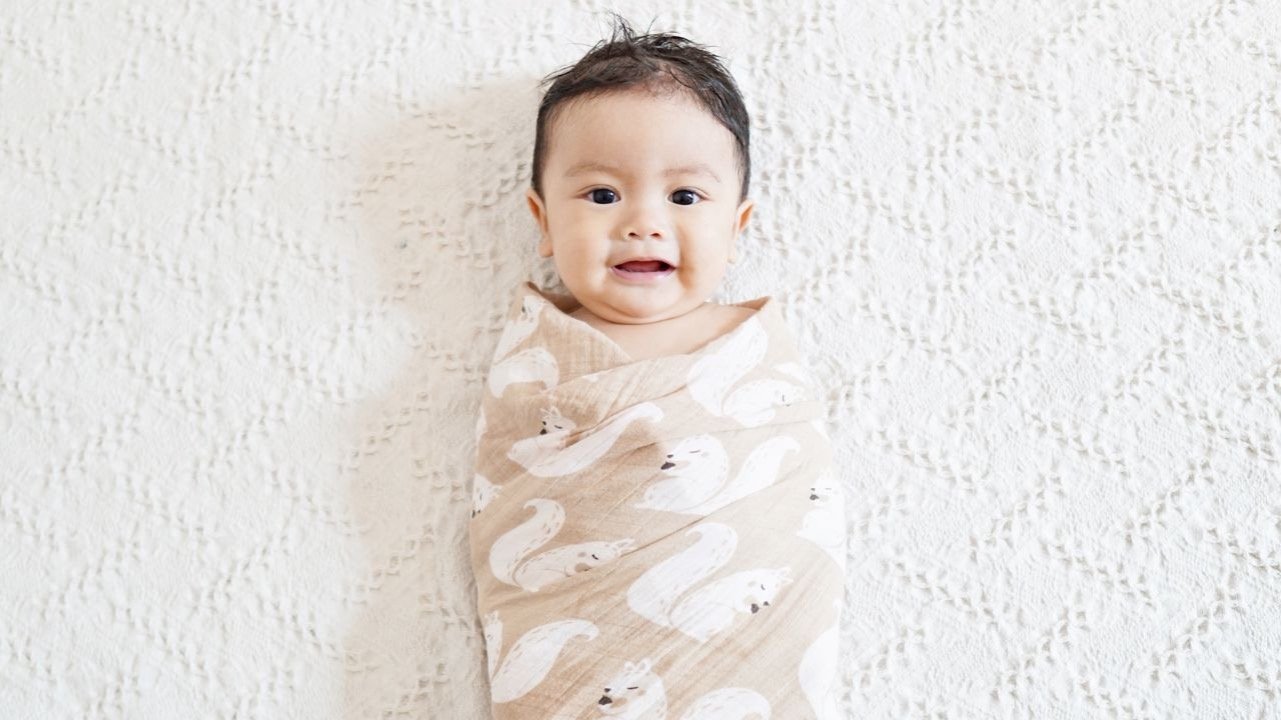
Swaddling is one of the first things I teach parents, whether I am working with a family overnight as a postpartum doula or supporting a tiny NICU baby learning to regulate outside the womb. It is a simple skill, but doing it correctly makes all the difference between a swaddle that holds and one that unravels the moment your baby so much as wiggles. So let me walk you through everything you need to know.
Why Swaddling Works
Newborns spend nine months tucked snugly in the womb, contained on all sides, with constant motion and warmth. Then they arrive earthside and suddenly find themselves in wide open space with no walls and a startle reflex that fires all on its own. That reflex, called the Moro reflex, is completely normal and it fades on its own around four to five months, but in the meantime it is one of the most common reasons babies wake themselves up mid-sleep.
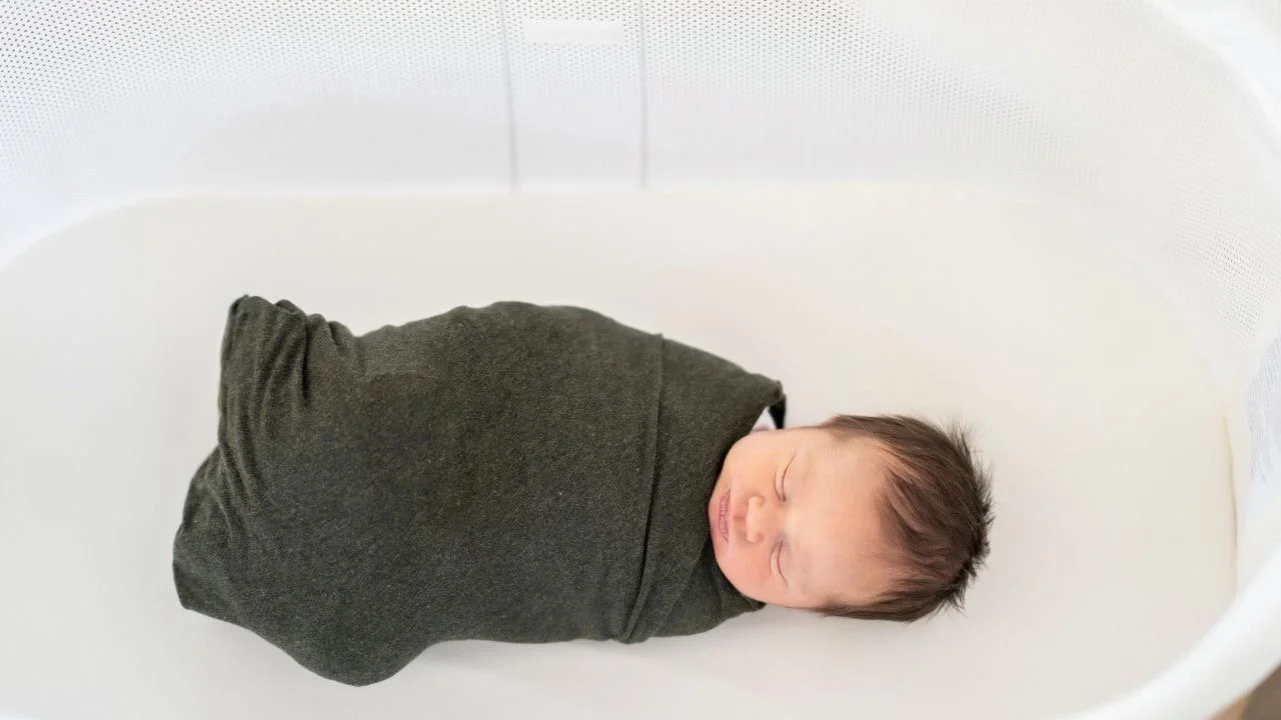
Swaddling works because it mimics the containment of the womb. When a baby is wrapped snugly, those little arms cannot fly out and trigger the startle response. It also helps babies feel secure and regulated, which is why you will often see a swaddled baby calm down almost immediately when they are picked up. In the NICU, we used swaddling as part of developmental care to support babies who were already working so hard just to exist outside the womb, and the results were consistently remarkable.
What You Need Before You Start
You do not need anything fancy. A square muslin swaddle blanket roughly 40 to 47 inches works beautifully. Muslin is breathable, stretchy enough to wrap snugly without overheating baby, and it softens with every wash. If muslin is not your thing, a thin cotton receiving blanket works too. What you want to avoid is anything too thick or fluffy, because warmth regulation is important and you do not want your baby to overheat.
Some parents love swaddle transition products like the Halo SleepSack Swaddle or the Love to Dream Swaddle Up, and these can be wonderful options, especially if you find the blanket method tricky at first. They often have a learning curve of their own though, so knowing the classic blanket technique is a skill worth having in your back pocket regardless.
Step-by-Step: The Classic Swaddle
STEP 1:
Lay your swaddle blanket on a flat surface in a diamond shape, with one corner pointing up.
STEP 2:
Fold the top corner down about six inches so you have a straight edge across the top. This fold is where your baby's neck will rest, and it keeps the fabric away from their face.
STEP 3:
Place your baby on the blanket so that their shoulders are right at or just below that folded edge. Their head should be above the fold, resting on the fabric but not covered by it.
STEP 4:
Now here is where most first-timers go wrong: the arms. You have two options, and both are totally safe depending on your baby's preference. Some babies calm most easily with their arms tucked straight down at their sides. Others prefer what I call the "froggy" position, where their arms are bent slightly at the elbow with hands near their chin or chest. If your baby is rooting or seems to soothe with their hands at their mouth, try the arms-up position first before tucking them down.
STEP 5:
Once you have decided on arm position, hold one of your baby's arms gently against their body and pull the blanket on that same side across their chest, tucking it snugly underneath their opposite arm and body. You want firm contact here, not a loose drape. A swaddle that is too loose will come undone and can become a suffocation risk, so snug is the goal.
STEP 6:
Next, take the bottom corner of the blanket and fold it up toward your baby's chin, tucking it gently under the first layer. This keeps their legs and hips covered. One important note: the bottom of the swaddle should be loose enough that your baby's hips and knees can still bend naturally. Their legs should be able to fall into a frog-like position with some room to move. Tight swaddling around the hips has been linked to hip dysplasia, so please do not cinch below the waist.
STEP 7:
Finally, bring the remaining side of the blanket across the chest and tuck it securely underneath the baby. You can also tuck it behind their back for a little extra hold. At this point, your swaddle should look like a little burrito and feel secure but not restrictive.
If you need more of a visual representation, here is my quick video on how to do a blanket swaddle below:
How Tight Is Tight Enough?
This is probably the question I get asked most often by new parents, and it is such a good one. A well-done swaddle should be snug across the chest and around the arms, but you should be able to slip two fingers flat between the blanket and your baby's chest without struggling. If you cannot fit two fingers in, loosen it slightly. If your baby is busting out of the swaddle within minutes, tighten it.
Always make sure there is no fabric near your baby's face. After wrapping, do a quick check: fabric away from the nose and mouth, chest snug, hips loose. Those three things will keep your swaddle safe every time.
Speaking of sleep: if you are doing everything right and your baby is still not sleeping the way you hoped, it is not because you are doing anything wrong. Newborn sleep is genuinely hard, and most parents need more than a swaddle tutorial to get through it. My Sleep Foundations Coaching Package is a fully personalized newborn sleep program designed for babies between 8 and 12 weeks, giving you a customized gentle sleep plan plus real-time text support from a postpartum doula and NICU nurse so you are never left guessing at 3 a.m. If you are ready to stop surviving and start sleeping, check it out here.
Common Swaddling Mistakes (And How to Avoid Them)
Leaving the hips too tight is the mistake I see most often, and it is the one with the most serious potential consequence. Always make sure there is room for a natural frog-leg position at the bottom of the swaddle. If the blanket is binding the knees straight or pinning the legs together tightly, loosen it from the waist down.
Starting the swaddle too loose is the next big one. Many parents feel nervous about wrapping their baby too firmly, so they leave too much slack. The problem is that a loose swaddle will come undone during sleep and the loose fabric becomes a hazard. Go snug from the beginning and check that two-finger rule.

Wrapping over a sleepy baby who just ate is also trickier than it sounds because a full belly means a baby who may not tolerate laying flat right away. Give it five to ten minutes after a feeding before swaddling, especially if your baby is prone to reflux.
Finally, swaddling a baby with a fever is not recommended. The extra layer traps heat and can make fever regulation harder. On warm days, a lightweight muslin with nothing else underneath is your best bet, and if your baby seems too warm, put them down without the swaddle for a bit.
When to Stop Swaddling
This is the part nobody warns you about: there will come a day when your swaddle stops working quite as well, and that is usually because your baby has figured out how to roll. The moment your baby shows any signs of rolling, even just pushing up on one side or pulling their hips over, swaddling needs to stop. Rolling in a swaddle is a serious safety concern because the baby cannot use their arms to push up if they end up face down.
Most babies are ready to transition out of the swaddle somewhere between three and five months, though every baby is different. A good transition strategy is to start by leaving one arm out for a few nights, then move to both arms out, and then drop the swaddle entirely. Products like the Love to Dream Swaddle Up arms-up design can help bridge this transition nicely because they still give babies some compression without containing the arms.
A Few Words on Safe Sleep While You Are at It
Swaddling works best when it is part of a safe sleep setup. The current safe sleep guidelines from the American Academy of Pediatrics recommend placing your baby on a firm, flat surface on their back every time they sleep, with no loose bedding, pillows, bumpers, or positioners in the sleep space. A swaddled baby on a firm flat surface on their back is a setup that supports both comfort and safety.
White noise and a dark room pair beautifully with a good swaddle. Together, they signal to your baby's nervous system that it is time to sleep, which means less work for you getting them down and more stretches of sleep once they are there.
Practice Makes Confident
The honest truth about swaddling is that it feels awkward for the first handful of times. You will have a corner that goes the wrong way, or your baby will wriggle just as you finish and the whole thing will unspool. That is completely normal. Like any hands-on skill, it clicks with repetition. By the end of your first week home, most parents can execute a solid swaddle in under a minute, often while half asleep, which is basically a parenting superpower.
If you are still struggling after a few tries, do not hesitate to ask for help. Your nurse before you leave the hospital, your pediatrician at the first well visit, or a postpartum doula can all give you a hands-on demonstration that makes everything click in a way a written tutorial cannot always do on its own.
Swaddling is one of those skills that pays dividends over and over in the early weeks. It soothes, it stretches sleep, and it gives you something concrete and reliable to reach for when your baby is inconsolable. Learn it well, practice it often, and know that every tight little burrito you wrap is a small act of comfort for a brand new person still figuring out what it means to be in the world.
Ready to take newborn sleep further?
If you are staring down weeks of unpredictable sleep and wondering if there is a better way, there is. Between 8 and 12 weeks is the ideal window to build gentle, lasting sleep foundations, and you do not have to figure it out alone. My Sleep Foundations Coaching Package gives your baby a fully personalized sleep plan built around your family's style, plus real-time text support from me so you have an expert in your corner exactly when you need one. No rigid schedules, no guesswork, just a clear and gentle roadmap to longer nights and smoother naps.