Common Sleep Training Mistakes and How to Fix Them
You did the research, you picked a method, you committed! So why is your baby still not sleeping?

You prepared for this. You read the posts, maybe watched a few videos, asked around in your mom group, and decided on a sleep training approach that felt right for your family. You committed to it. You had a hard night or two, maybe three, and you kept going because you knew consistency was the whole point.
And yet here you are, two weeks in, and something still isn't clicking. Your baby is still waking more than you expected. Or the method worked for nighttime but naps are a disaster. Or things improved for a few days and then completely fell apart. You're starting to wonder if sleep training just doesn't work for your baby, or if you're doing something wrong, or if you need to just accept that sleep is a thing that happens to other families.
Here's what's more likely: sleep training is working the way it's supposed to, but something in the setup is getting in the way. The method itself is rarely the problem. What tends to derail results is a handful of very fixable issues that are easy to miss when you're exhausted and in the thick of it.
This post is going to walk through the most common ones.
The Schedule Isn't Quite Right
This is the most frequent culprit, and it's worth starting here because it affects everything else.
Sleep training teaches your baby to fall asleep independently and connect sleep cycles without your help. But it can only do its job if your baby is actually biologically ready to sleep when you put them down. If the schedule is off — if wake windows are too long or too short for your baby's age, if nap timing isn't lined up with their natural sleep pressure, if bedtime is too late — you're asking your baby to do something their body isn't prepared for yet.

An overtired baby at bedtime is flooded with cortisol, which makes it harder to settle and harder to stay asleep. An undertired baby simply isn't ready and will fight sleep no matter how consistently you implement your method. Neither situation is a sleep training failure. It's a timing issue, and timing is fixable.
If you're not sure whether your schedule is age-appropriate, that's genuinely worth looking at before assuming the method needs to change. Wake windows shift significantly between four months and twelve months, and what worked at five months may not be working at seven for this exact reason.
The Bedtime Routine Isn't Consistent Enough
A predictable bedtime routine is one of the most powerful sleep cues you can build for your baby, and it works because the brain learns to associate the sequence of events with sleep. Bath, lotion, feeding, book, song, crib — whatever your routine looks like, the repetition is the point.

Where this tends to fall apart is inconsistency. Skipping steps on busy nights, starting at wildly different times, having different caregivers do it in different orders — all of these erode the cue. Your baby's brain needs to learn that the routine reliably ends in sleep, and that takes repetition across many nights before it becomes automatic.
The routine doesn't need to be elaborate. It does need to be consistent.
Sleep Associations Are Still in the Picture
This is a big one. Sleep training works by helping your baby learn to fall asleep on their own, which means they need to be put down awake — drowsy is okay, but genuinely awake — so that whatever they do to settle themselves is something they can replicate independently at 2am when they surface between sleep cycles.
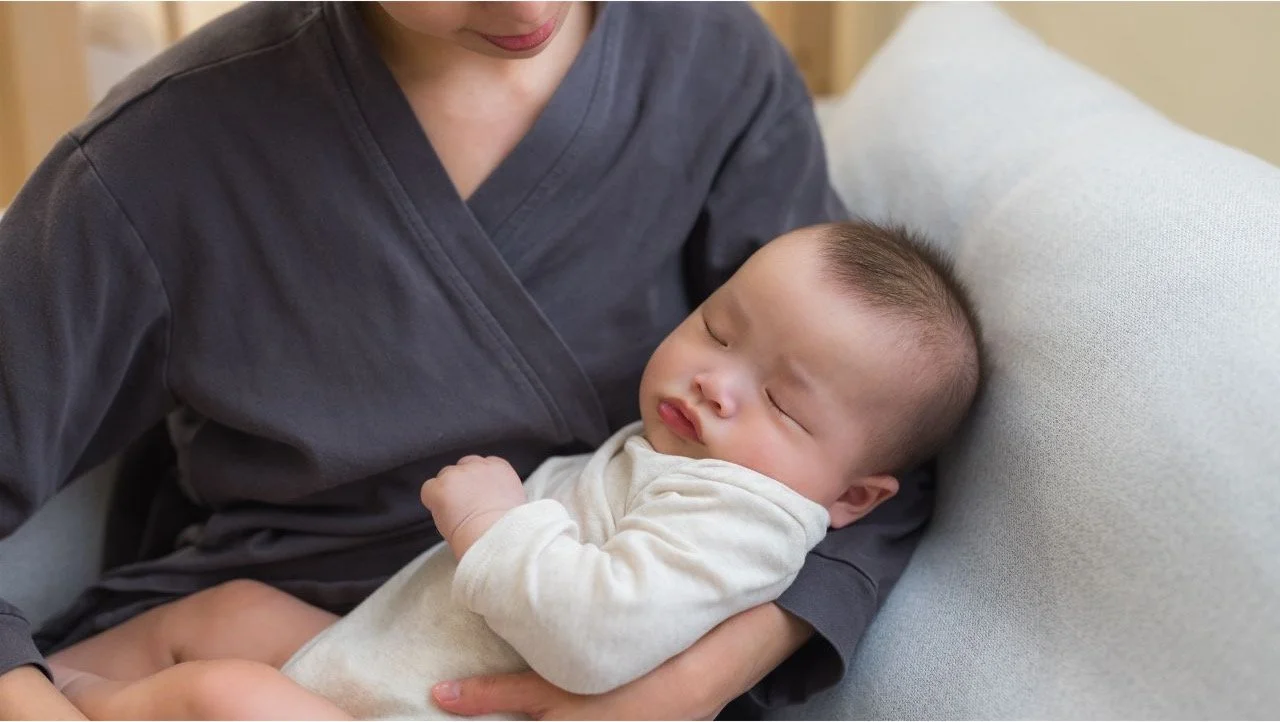
If your baby is nursing, rocking, or being held until they're fully asleep and then transferred to the crib, that's a sleep association. The problem isn't the nursing or the rocking on its own — it's that your baby needs that experience to get to sleep, and when they naturally wake in the night, they'll need it again to get back to sleep. That's not a character flaw in your baby. It's just how sleep associations work.
If you're implementing a sleep training method but still completing the feed or the rock until your baby is fully out, the training won't hold. The starting point matters. Drowsy but awake is the phrase you've probably heard, and it's the phrase for a reason.
Inconsistency Between Caregivers
Sleep training requires everyone on the team to be running the same play. If one parent is holding firm with the method and the other is going in and picking up after five minutes of crying, your baby gets a mixed message — and a very logical one from their perspective. The crying sometimes works. So they'll keep trying.

This isn't about being rigid for the sake of it. It's about the fact that babies learn patterns through consistent repetition, and inconsistency means the pattern never gets established clearly enough to stick. Before you start, it's worth a real conversation with your partner about what the plan is, what the check-in schedule looks like, and what you'll both do when it gets hard — because it will get hard, and you want to have already agreed on the approach before you're in the middle of a difficult night.
Responding Too Quickly to Every Sound
Babies are noisy sleepers. They grunt, stir, fuss, and cycle in and out of light sleep in a way that sounds alarming and is completely normal. If you're rushing in at the first sound, you may be interrupting a baby who was actually on their way back to sleep on their own.

This is especially common in the early days of sleep training when parents are understandably anxious and hyper-attuned to every noise. Giving your baby a few minutes — even just two or three — before responding lets you see whether they're actually waking and escalating or just making noise in the middle of a sleep cycle.
It can feel counterintuitive to wait when you can hear your baby. But intervening before your baby has actually woken up fully can derail a sleep cycle that would have resolved on its own.
Naps and Nights Aren't Being Treated the Same Way
A lot of families crack the code on overnight sleep before naps, and that's normal — nights tend to respond faster because sleep pressure is higher and the biology is working more strongly in your favor. But if you're sleep training at night and then defaulting to contact naps or rocking for every daytime sleep, you're asking your baby to operate with two completely different systems.
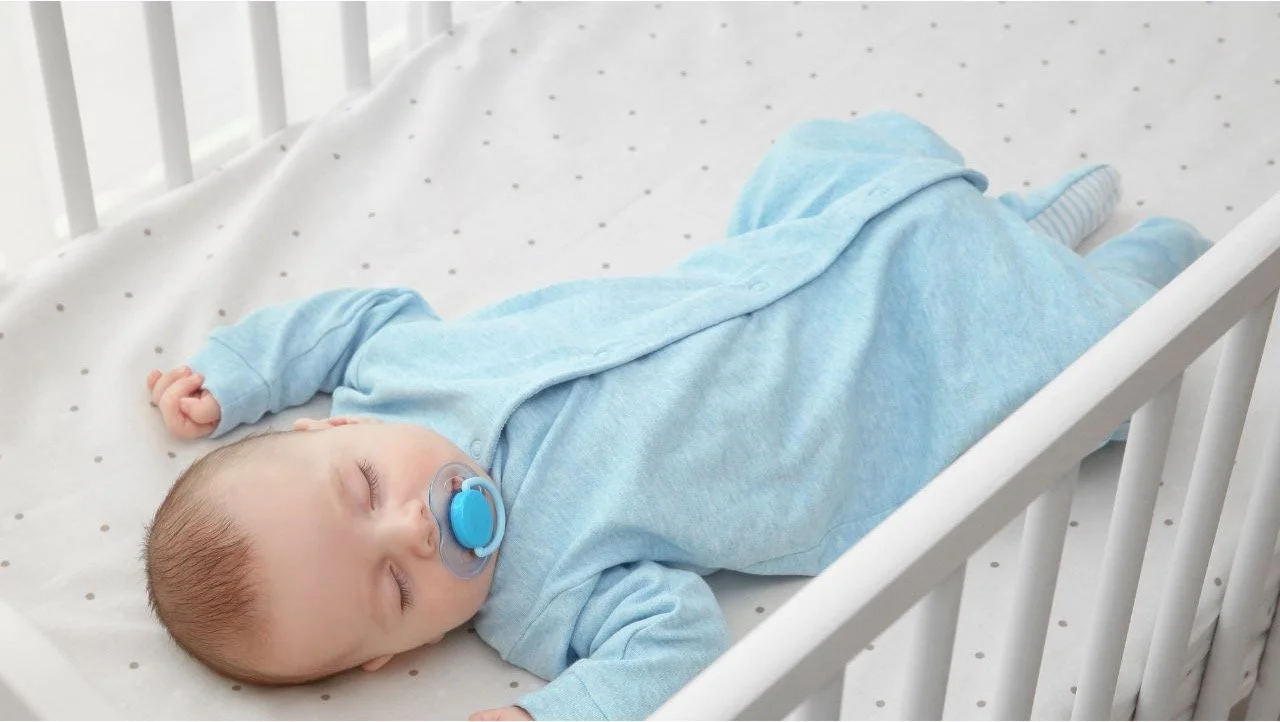
This isn't the end of the world and it doesn't mean you have to tackle everything at once. But it does explain why nap progress is slow even when nights are improving. Naps are genuinely harder to train — they're shorter, sleep pressure is lower, and the windows are tighter. If naps aren't improving alongside nights, it's usually because the approach at naptime is still different, not because naps can't be trained.
Expecting Too Linear a Process
Sleep training is not a straight line. A very common experience is: nights one and two are hard, night three is dramatically better, night four is worse again, night five is better, and somewhere around day seven to ten things start to stabilize. Parents who quit on night four because things got harder assume the method failed. What actually happened is normal variation in the learning process.
Regressions also happen after sleep training is established — during illness, travel, developmental leaps, and transitions like dropping a nap. A regression after successful sleep training doesn't erase what your baby learned. It means something temporarily disrupted their sleep, and a few days of your original method will almost always get things back on track.

If you've been at this for a few weeks and you're still not sure what's getting in the way, sometimes what you actually need is someone to look at your specific schedule, your specific baby, and your specific situation and tell you what to adjust. Reading general advice only gets you so far when the details matter.
That's exactly what my Sleep Foundations program is designed for. It's built for babies 8 weeks through 12 months and includes a fully personalized sleep plan, a one-on-one consultation, and two weeks of text support while you implement it. Whether you're troubleshooting a method that isn't quite working or starting sleep training for the first time, the plan is built around your baby and your goals — not a one-size-fits-all approach. You can see what's included at bringhomebliss.com/sleep-foundations.
Still troubleshooting? You don't have to figure this out alone.
Kim's Sleep Foundations program is built for babies 8 weeks through 12 months. You'll get a fully personalized sleep plan, a one-on-one consultation, and two weeks of real-time text support while you implement it — so you're never doing this in the dark.
See What's Included in Sleep Foundations →A Note on When to Genuinely Reassess
There are situations where it makes sense to pause sleep training and revisit. If your baby is sick, teething severely, or going through a major developmental transition, their ability to learn new sleep skills is genuinely reduced. Pushing through illness rarely works and usually results in more crying without progress.
If your baby is younger than four months, formal sleep training isn't developmentally appropriate yet. The newborn and early infant stage calls for responsive feeding and care, and that is the right approach for this window.
And if your current method feels truly unsustainable — if the crying is beyond what you can manage, if you're finding yourself unable to follow through — it's worth considering whether a different method might be a better fit for your family. Switching methods isn't failure. Choosing a method you can actually implement consistently will get you further than white-knuckling through one that isn't working for anyone.
The Bottom Line
Sleep training failing is rarely about the method itself. It's almost always about the setup — the schedule, the consistency, the sleep associations, the expectations. Most of what gets in the way is fixable once you can identify it.
If you've been troubleshooting on your own and you're ready for a clearer path forward, Kim's Sleep Foundations program gives you a personalized plan with real support behind it. You can find all the details and get started at bringhomebliss.com/sleep-foundations.