The Best Baby Massage That Relieves Gas Quickly
If you’re a new parent, you’ve probably already discovered one of the biggest surprises of the newborn stage: babies have a lot of gas. Their tiny digestive systems are still learning how to work! Even the simplest things like feeding, crying, swallowing air, or adjusting to a new formula can leave them squirmy, uncomfortable, and overtired.
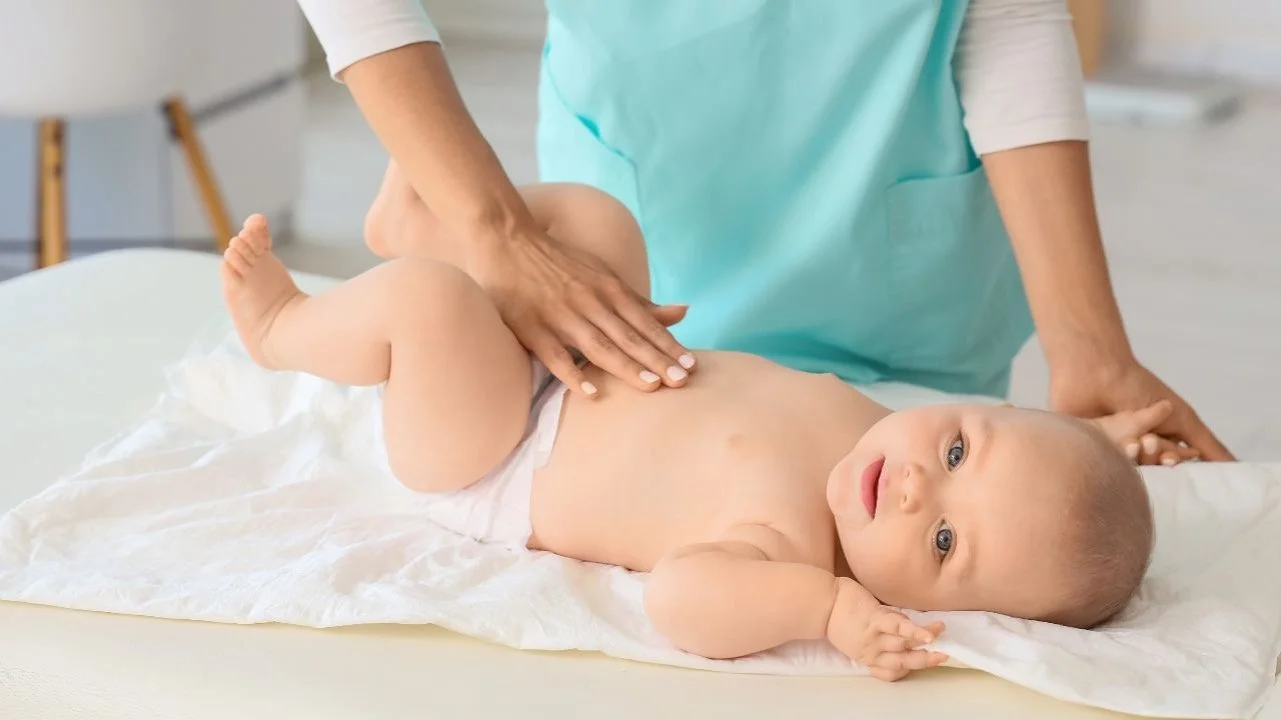
As a postpartum doula, I teach parents lots of soothing techniques, but one of the most effective (and easiest!) is the “I Love You” baby massage. This gentle belly massage can help move trapped gas through the intestines, ease fussiness, support digestion, and strengthen your bond with your little one.
The best part is you don’t need special tools. You don’t need experience. You just need your hands, a calm environment, and a few minutes.
Below, we’ll walk through:
What the “I Love You” baby massage is
Why it works so well for gas and digestion
When to use it
Step-by-step instructions
Safety tips and what to watch for
A video where I walk you through the moves in real time
Let’s get into it and get your baby feeling more comfortable!
What Is the “I Love You” Baby Massage?
The “I Love You” massage is a gentle, evidence-informed infant massage technique that uses slow, purposeful strokes on your baby’s tummy to encourage trapped gas and stool to move through the digestive tract. The movements follow the natural direction of digestion, which is why it’s so effective.
It’s called the “I Love You massage” because the strokes trace the letters I, L, and U on your baby’s belly. It’s a sweet, memorable way to learn it and a soothing ritual your baby will soon recognize.
It is safe for newborns and older babies and can be easily incorporated into your daily routine.
Why Babies Get Gassy (And Why This Massage Helps)
Before jumping into the technique, it’s helpful to understand why gas happens so often in babies and why massage is one of the quickest natural ways to help.
Why Babies Get Gassy
Newborn and infant gas is extremely common because:
Their digestive systems are immature and still developing
They swallow air while eating, crying, sucking, or even just breathing
Their abdominal muscles are weak, so it’s harder for them to pass gas
They spend a lot of time lying on their backs
They may be adjusting to breastmilk composition changes, new formulas, or bottle transitions
You may notice your baby:
Squirming or pulling their legs up
Grunting
Crying during or after feeds
Waking at night uncomfortable
Having trouble settling for naps
Passing very smelly gas (totally normal!)
Gas itself isn’t harmful, but it can be very uncomfortable.
How the “I Love You” Massage Helps
This massage works for a few key reasons:
1. It stimulates peristalsis
Peristalsis is the wave-like motion that moves gas and stool through the intestines. Gentle abdominal strokes help encourage that natural movement along.
2. It helps release trapped bubbles
Some gas gets stuck in pockets or angles in the intestines. Massage with downward strokes helps guide those pockets toward the rectum so your baby can pass them more easily.
3. It relaxes the baby’s abdominal muscles
Gas feels worse when a baby is tense. Massage softens tension and helps the belly relax, allowing gas to move.
4. It improves overall digestion
Regular massage can help reduce constipation, support better feeding, and promote more comfortable bowel movements.
5. It triggers calming hormones
Touch releases oxytocin (the bonding and relaxation hormone) for both you and your baby, making this a soothing ritual, especially in the evening or before bed.
Parents often say their baby passes gas during the massage, which is exactly what we want!
When Should You Do the "I Love You" Massage?
You can use this technique:
Before bed or naps
After a diaper change
When your baby is fussy from gas
As part of a bedtime routine
After feeds (wait at least 30 minutes if your baby tends to spit up)
Anytime you notice squirming or tummy tightness
Try to choose a time when:
Your baby is awake and calm
Their diaper is clean
Their tummy is not full
The room is warm
You can focus without rushing
It only takes a few minutes, but those few minutes make a huge difference.
How to Do the “I Love You” Baby Massage (Step-By-Step)
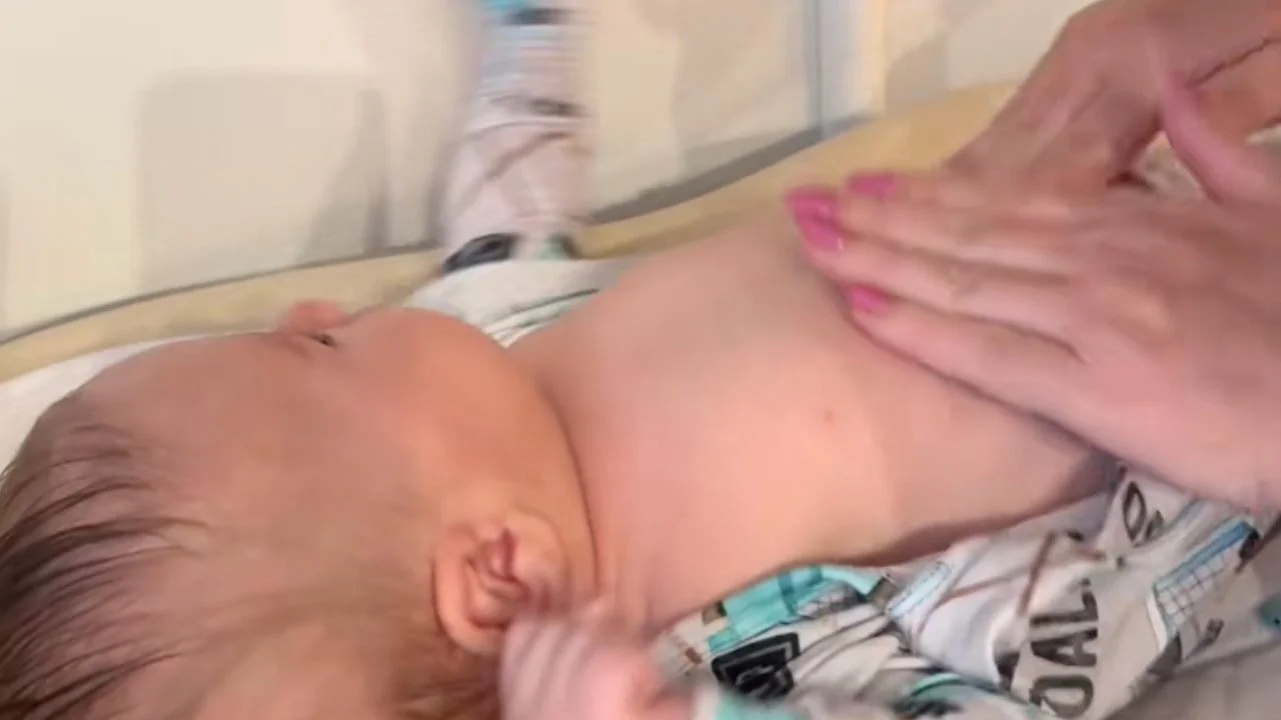
Before starting, wash your hands and apply a tiny bit of baby-safe lotion or natural oil (optional). Make sure the room is warm, and place your baby on their back on a soft towel or blanket.
Keep your touch gentle, slow, and steady. You’re not pressing hard, but just enough to gently move the skin and tissue.
Here is the step-by-step breakdown:
Step 1: The “I” Stroke
This is the simplest stroke and the perfect warm-up.
How to do it:
Start on your left side of baby’s tummy (this is the baby’s right side).
Gently place two or three fingers just under their ribcage.
Glide your fingers straight down, toward the baby’s hip.
Repeat 5–10 times.
Why it works:
This stroke moves gas downward along the descending colon, where it’s easier for babies to release it.
Step 2: The “L” Stroke
This stroke helps move gas across the top of the intestines and down the side.
How to do it:
Begin at the baby’s upper right side (your left).
Glide your fingers across the top of their belly—straight across, just under the ribcage.
When you reach the left side (your right), turn and glide down in the same motion as the “I” stroke.
Imagine you’re drawing an upside-down L.
Repeat 5–10 times.
Why it works:
Gas often gets trapped where the colon turns. The “L” stroke gently guides those bubbles through the turn and into the descending colon.
Step 3: The “U” Stroke
This is the longest and most soothing movement.
How to do it:
Start at the lower right part of baby’s belly (your left).
Glide your fingers up the right side.
Move across the top of the belly (left to right from baby’s perspective).
Then glide down the left side.
You’ve just drawn an upside-down U.
Repeat 5–10 times.
Why it works:
This completes the full digestive pathway and is incredibly effective for encouraging gas to move out.
Additional Techniques That Pair Well With the “I Love You” Massage
You can add in a few other gentle movements to boost the effectiveness:
1. Knee-to-Tummy Presses
Gently bend your baby’s knees toward their tummy.
Hold for 5–10 seconds.
Release and repeat.
This puts light pressure on the lower intestines and often results in immediate gas release.
2. “Bicycle Legs”
Move your baby’s legs in a slow bicycle motion, alternating knees toward the tummy.
This helps mobilize gas and supports bowel movements.
3. Warm Tummy Compress
Place a warm (not hot!) washcloth on your baby’s belly for 1–2 minutes before starting the massage. This relaxes the muscles and makes the massage even more effective.
How Long Should the Massage Last?
There’s no perfect timing, but most babies do well with:
2–5 minutes when they’re very young
5–10 minutes as they get bigger and enjoy the process
You can stop anytime your baby:
Becomes fussy
Shows signs of overstimulation
Turns away or stiffens
Seems tired or hungry
Some babies love this massage and melt into it. Others prefer short sessions. Follow their cues, they’ll guide you!
Not sure how to understand your baby’s signals? Learn more about effectively reading your baby’s cues to better meet their needs and connect with them.
Safety Tips for the “I Love You” Massage
The “I Love You” routine is generally very safe. Still, a few simple guidelines ensure that it’s soothing and appropriate for your baby.
Do NOT do tummy massage if:
Your baby has just eaten within the last 20–30 minutes
The belly feels unusually hard or distended
Baby seems to be in pain instead of discomfort
There is vomiting after feeds
Your baby has a fever or illness
Use very gentle pressure
You should be moving the skin, not pushing into the abdomen.
Always massage clockwise
This follows the direction of digestion. Massaging backward can worsen discomfort.
Stop if your baby cries
Crying means: “I need something different right now.”
Talk to your pediatrician if you notice
Persistent constipation
Bloody stools
Projectile vomiting
Severe colic symptoms
Reflux that worsens over time

How Often Should You Do This Massage?
Most families use it:
Once or twice a day during the newborn stage
As needed when gas hits
Before bed to help babies settle
During tummy troubles (constipation, discomfort, overtired fussiness)
Consistency helps. Many babies respond best when this becomes a predictable part of their daily routine.
What Results Can You Expect?
Parents often notice:
Baby passes gas during the massage
Baby becomes calmer while you massage
Less crying after feeds
More comfortable bowel movements
Better sleep stretches
Less evening fussiness
A stronger sense of bonding during touch
While it isn’t a cure-all for every tummy issue, it does reliably help thousands of babies feel more comfortable and gives parents a tangible way to support them.
Watch the “I Love You” Baby Massage in Action
I’ve included a TikTok video below where I demonstrate each step in real time. Watching the movements can make it even easier to follow along:
Practice the strokes while watching to build confidence. A few rounds and you’ll feel like a pro.
A Simple Ritual That Makes a Big Difference
The newborn stage can feel overwhelming, especially when you’re navigating gas, fussiness, and sleepless nights. But tools like the “I Love You” baby massage give you a way to soothe your baby naturally, build connection, and support their developing digestive system.
Try adding it to your daily routine and see how your little one responds. With practice, this often becomes a favorite calming ritual for both of you!
If you want more baby-care support, personalized sleep help, or postpartum guidance, I’m always here.
You don’t have to navigate any part of this journey alone. And Google and ChatGPT can only get you so far (and make you spiral down an unnecessary rabbit hole).
Check out my virtual support services, which includes an “ask me anything” call where you can get quick, personalized help on everything from feeding to sleeping to general baby troubleshooting that naturally comes up! I’m here to help make your postpartum journey a blissful one.