Understanding Baby Cues: A Detailed Guide for New Parents
New parenthood comes with its fair share of struggles! But one of the biggest challenges (whether it’s your first baby or your fourth) is understanding baby cues. Babies can’t use words, but they are constantly communicating. Every movement, sound, and facial expression is actually a clue to what they’re feeling or needing.
Learning to decode your baby’s signals not only reduces fussiness and frustration, but also strengthens your bond. Cracking the infant cues code also helps your baby feel safe, seen, and cared for. With time, patience, and practice, you’ll feel confident responding to your little one’s needs before the tears even begin!
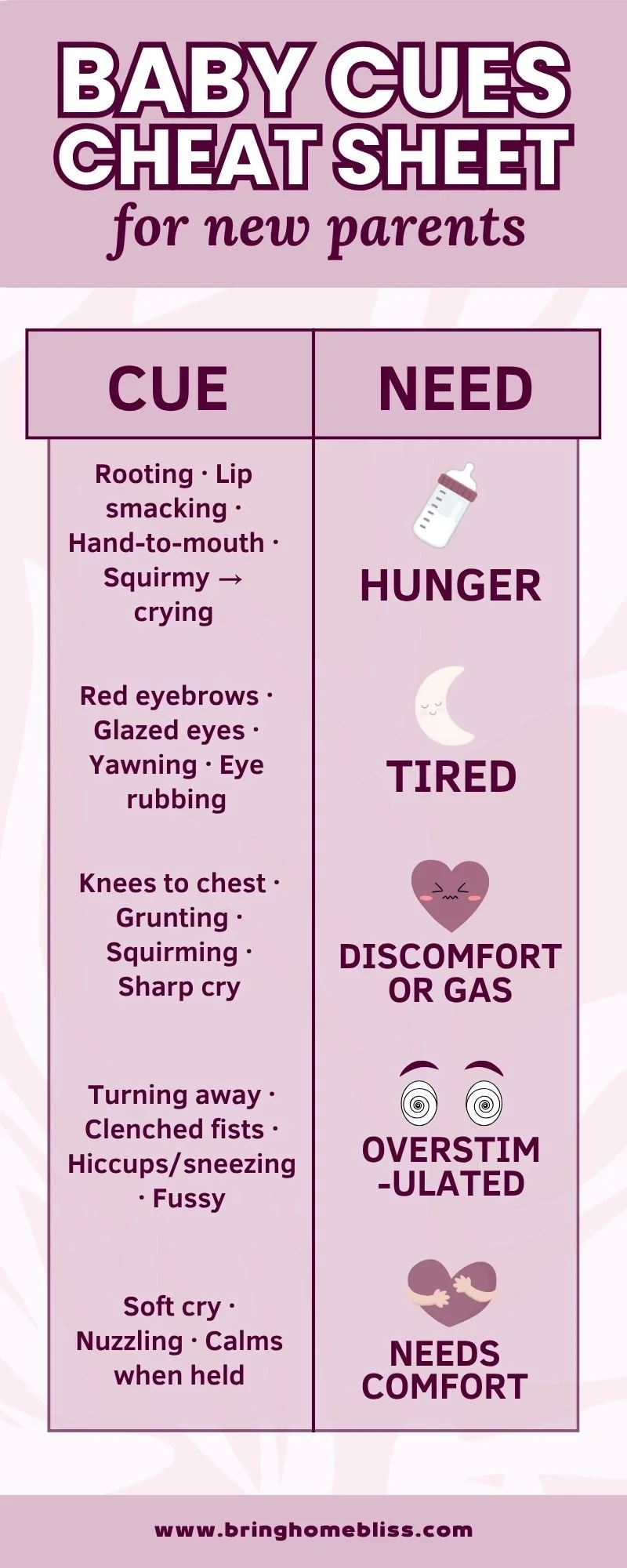
Below, you’ll find an in-depth guide to the cues infants commonly show and exactly how to respond to each one.

Why Understanding Baby Cues Matters
Before we jump into the specific signs, it helps to understand why cues are such a big deal:
Babies rely on cues because their nervous system is still developing
Responding early reduces crying, overstimulation, and feeding frustration
Consistent responsiveness helps regulate your baby emotionally and physically
Over time, your baby learns: “When I communicate, someone responds.”
This lays the foundation for secure attachment, smoother days, and better sleep
Understanding cues makes life easier for both of you. It removes guesswork, builds trust, and the more attuned you become, the more your baby thrives.
Recognizing Common Baby Cues (and Exactly How to Respond)
Hunger Cues
Babies express hunger long before they cry. Crying is actually a late hunger cue, and once they reach that point, feeding can be harder.
Early Hunger Cues:
Stirring or waking from sleep
Opening and closing their mouth
Rooting (turning their head, searching for a nipple)
Tongue thrusting
Mid Hunger Cues:
Sucking on hands or fingers
Lip smacking or “kissy face” movements
Increased alertness
Late Hunger Cue:
Crying, bright red face, frantic movements
How to Respond:
Offer the breast or bottle as soon as early cues appear. Feeding early often leads to:
Easier latching
Less gulping and air intake
Calmer, shorter feeding sessions
More predictable patterns over time
If your baby is already crying, calm them first with skin-to-skin or gentle rocking before offering a feed.

Sleepiness Cues
Babies become overtired quickly, and once they cross that line, it’s harder for them to settle. Recognizing early sleep cues makes naps and nighttime smoother.
Early Sleep Cues:
Red eyebrows or eyelids
Glazed or unfocused eyes
Turning their head away from stimulation
Slight fussiness or whining
Mid Sleep Cues:
Rubbing eyes or ears
Yawning
Slower body movements
Late Sleep Cues:
Arching their back
Crying
Stiffening or rigid body
Flailing arms or legs
How to Respond:
Move to a calm, dim environment
Offer rocking, swaying, or shushing
Use white noise to mimic the womb
Try a short soothing routine (diaper change → swaddle → cuddle → feed if needed)
Consistency helps babies learn the pattern that leads to sleep.

Discomfort Cues
Discomfort feels different from hunger or tiredness, and babies tend to communicate it with their whole body.
Common Signs:
Squirming or writhing
Grunting
Pulling legs up toward the belly (often gas-related)
Back arching
High-pitched or sudden crying
Red or strained face
How to Respond:
Start by checking the basics:
A dirty or wet diaper
Clothing that’s too tight
Temperature (cold hands or sweaty neck)
Gas buildup from feeding
A tag or zipper irritating their skin
A hair tourniquet (when a strand of hair accidentally gets wrapped tightly around a baby’s finger, toe, or other body part, cutting off circulation.)
Then try:
Burping (even if they haven’t fed recently)
Bicycle legs
Gentle tummy or back massage
Holding them upright on your chest
Using a warm compress on the belly for gas relief
Babies often need help releasing trapped air or tension and your gentle touch can make a huge difference.
My favorite technique is the “I Love You” massage. Check out my Tiktok here to see a tutorial.

Overstimulation Cues
Newborns are sensitive. Too much noise, movement, or interaction can overwhelm their still-developing senses.
Signs of Overstimulation:
Turning their head away
Staring at one spot
Fussing or whining
Rapid breathing
Hiccups
Sneezing
Clenched fists
How to Respond:
Reduce noise and activity
Move them to a quiet room
Turn down lights
Hold them close with skin-to-skin
Use rhythmic, slow movements
Avoid direct eye contact until they settle
Sometimes babies just need a break from the world.

Wanting Connection + Comfort
Not every cry is hunger, tiredness, or discomfort. Sometimes your baby simply needs to feel close to you.
Clues:
Soft “eh-eh” crying
Reaching arms
Nuzzling into your chest
Calming instantly when picked up
How to Respond:
Hold your baby close
Use a carrier or wrap
Engage with soothing voice
Rock them gently
Offer skin-to-skin for deeper regulation
This builds emotional security and reduces cry duration overall.

Gas, Reflux, or Digestive Cues
Digestive discomfort is extremely common in the newborn phase and can look like:
Grunting during sleep
Frequent hiccups
Lots of arching or stiffening
Squirming during or after feeds
Sudden crying after being laid flat
How to Respond:
Burp halfway through and after feeds
Keep baby upright 10–20 minutes after eating
Experiment with slower-flow nipples (if bottle-feeding)
Try gentle tummy time when awake
Speak with a lactation consultant or pediatrician if reflux is suspected
Listening to these cues is the first step toward identifying patterns.

Putting It All Together: Patterns Matter More Than Single Cues
Babies don’t communicate in just one way! They actually use a combination of signals.
A single yawn doesn’t always mean tired. One whimper doesn’t always equal hunger.
What you really want to do is to step back and notice patterns:
“When he rubs his eyes + turns his head away, he’s ready for nap.”
“When she smacks her lips + wiggles her hands, she’s hungry.”
“Right after feeds, he always pulls his legs up. Probably gas!”
With time, this becomes second nature as you get to know your baby’s way of communicating with you.
When You’re Still Unsure (Because That Happens Too!)
Even the most experienced parents have moments where they can’t figure out what a baby needs.
If you’re feeling overwhelmed:
✔️ Take a breath
✔️ Do a quick mental checklist (hungry? tired? diaper? too warm/cold? overstimulated?)
✔️ Hold your baby close. They regulate through your presence.
✔️ Remember: You’re not doing anything wrong. Your baby is learning, too.
How Bring Home Bliss Can Support You
Bring Home Bliss exists to help parents feel calmer, more confident, and more connected to their baby. Especially during those first postpartum weeks.
We offer:
✓ Virtual Doula Support
Personalized guidance for everything from feeding to soothing to schedules.
✓ Newborn Sleep & Routine Help
Gentle, developmentally appropriate strategies for each stage of infant sleep.
✓ Baby Registry Coaching
No more guesswork. Get a registry built around your lifestyle and your baby’s needs.
✓ Tools & Resources for a Smoother Postpartum
Workshops, checklists, guides, and emotional support that make the transition easier.
Whether you need answers at 2 a.m., someone to help you troubleshoot cues, or simply reassurance that you’re doing everything right, you don’t have to figure it all out alone.
Check out all our virtual services to see how we can support your postpartum journey without you having to even leave your newborn bubble!
It truly does take a village. Understanding your baby’s cues is one of the most empowering skills you can develop as a new parent, but you don’t have to learn it in isolation. With practice your postpartum journey can be filled with clarity, connection, and confidence.
Your emotional well-being matters. Your baby’s comfort matters.
And you deserve support that makes this season feel manageable and meaningful.
On Pinterest? You can save this image below to one of your boards so you can always quickly reference it whenever you need: