3 Little Known Hacks to Get Your Newborn to Sleep Longer
It can be the most helpless feeling. As the parent of a newborn, struggling to get your baby to sleep—despite seemingly trying everything—can feel like the most stressful thing that’s ever happened to you. Add in the fact you’re probably lacking sleep and recovering from all things postpartum, and the task can start to feel impossible.

First, remember, you’re not alone. Every generation of mothers has struggled at one point or another. Our generation has it tough: We have so much information now, it feels like we should be able to solve everything with some data and research and a ChatGPT query. It’s not that easy. Every child is different, things change through every leap every few weeks, and there’s no right or wrong answer when it comes to solving the sleep-time conundrum for your little one.
If you’re really at a point of throwing up your hands and needing help, never hesitate. Your pediatrician or sleep consultants are one call or message away. But through our experience, we’ve discovered these three little-known hacks are a great place to start in order your newborn to sleep longer. We hope your next secret is enclosed in the checklist below, and if not, perhaps it’ll come to use when the next sleep regression starts up.
1. Observe your baby for 30-60 seconds before picking up your noisy baby—learn about active sleep
This is a common thing new parents wish someone told them before having a newborn. New parents are on high alert when their babies are home with them for the first time—and we want to be there right away to help our little ones. It is only natural to want to pick up your baby right away when you hear them grunting or moving around, perhaps on the verge of crying.

The truth is, unless you’ve heard about active sleep, you might discuss it as crying and signs of distress.
Let’s define active sleep: Especially in the first weeks of a baby’s life, you’ll likely notice your babies twitching, grimacing, smiling and/or grunting during sleep. This is likely “active sleep,” essentially the infant version of REM sleep. Nearly half of a newborn’s sleep time might be spent in “active sleep.” You might also notice what’s known as the Moro reflex—often called the startle reflex—which can complicate things further. It’s a primitive survival reflex present at birth, triggered by sudden movement, loud sounds, or the sensation of falling. When activated, babies fling their arms out, then pull them back in, often followed by crying. This reflex is controlled by the brainstem and is completely involuntary.
Observe your baby for 30-60 seconds, instead of picking them up right away, as they might not be ready for attention—their bodies are simply working through the cycles of sleep. You don’t want to disrupt this, otherwise you’re waking up your baby unnecessarily, causing distress for everybody.
2. Don’t stretch out a baby’s last feed—front-loading actually works best
You’ve probably heard advice about feeding a baby less often during the day, so that the final feed is longer, which, in theory, might prolong their sleep at night. That’s usually not the case.
Newborns who don’t get enough calories during the day tend to wake more at night, not less.
Especially if you struggling to figure out the right balance between feeding and sleeping, try front-loading the baby’s feeds.
Offer full, unrushed feeds during the day. A baby will likely want the biggest bottle as the first one after a long night’s sleep. Avoid “snacking” feeds that leave baby half-full. As you’ve probably read, newborns don’t have circadian rhythms yet, but they do respond to patterns. When their caloric needs are met during the day, their bodies are less desperate to wake them frequently at night.
Many parents are shocked to discover that once daytime feeds improve, nighttime sleep stretches naturally lengthen—without doing anything special overnight.

Here are steps to implement front-loading feeds:
Wake your newborn for feeds during the day if needed (every 2–3 hours is typical early on).
Keep daytime feeds bright, interactive and complete.
Avoid letting baby fall asleep too early in the feed—burp, switch sides, or gently stimulate if needed.
This isn’t about overfeeding. It’s about effective feeding. A well-fed baby is a more relaxed sleeper.
3. Turn the noise on your sound machine up—not down—to settle your baby
Sound machines like the Hatch or a Dreamegg are great companions on the journey to easier bedtimes. But you might be mismanaging the features on your device.
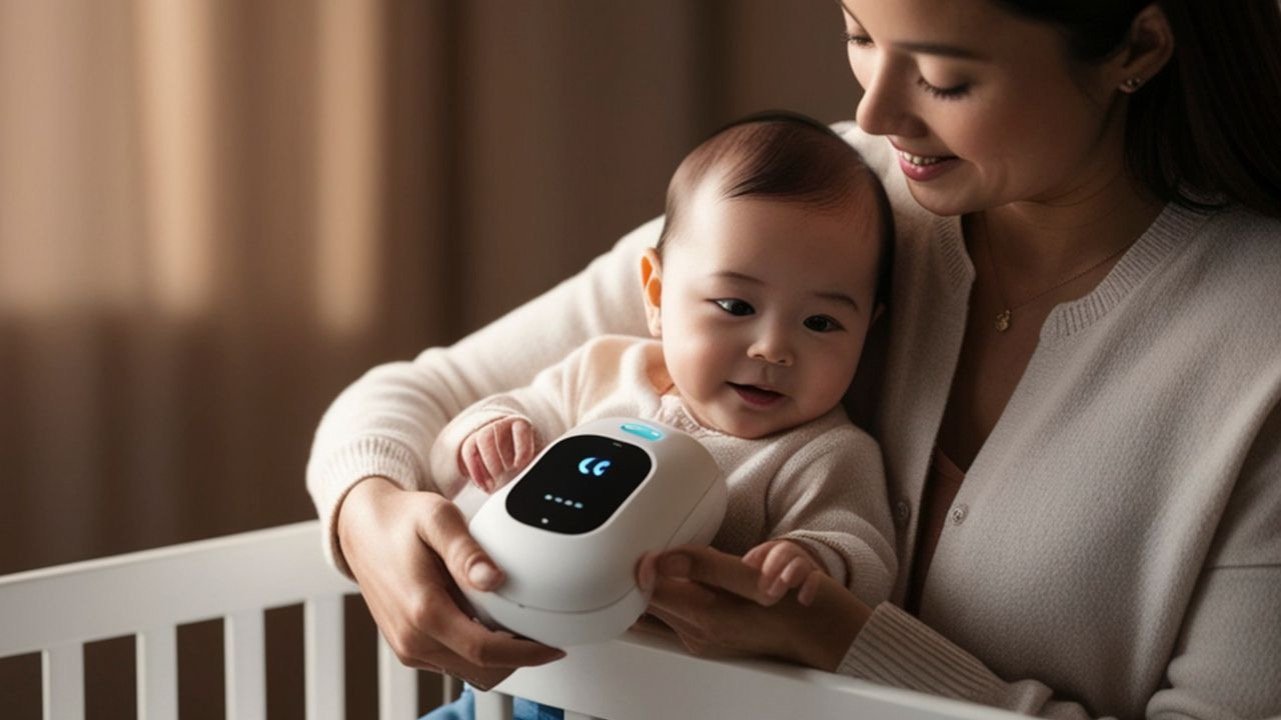
An inclination with new parents is to not play the sound too loud, with the thought being that loud sounds might make it harder for the baby to fall asleep.
The opposite is actually true!
Your newborn is still adjusting to the outside world. And in momma’s belly, there was constant sound. The best you can mimic that environment, the more likely your baby will be comfortable to sleep uninterrupted.
I’ve been with parents who were struggling to get their newborn to sleep consistently, and all I did was turn the volume up on their sound machines, and they were amazed at what a change it could lead to. The white noise (static) or pink noise (rain or ocean waves) are perfect options as it’s all about mimicking the sounds from the womb. Now the key is, crank up the sound—and hopefully that’s the key to getting your newborn to sleep peacefully for longer stretches.
When you’re running on broken sleep, even simple decisions can feel overwhelming. You deserve support that feels clear, calm, and doable.
Bring Home Bliss sleep guides were created to help parents understand their baby’s sleep cues, build sustainable routines, and finally get some rest without rigid rules or unrealistic expectations. If you’re ready for guidance that feels reassuring instead of stressful, you can explore the full sleep guide shop and take the next step toward more peaceful nights.